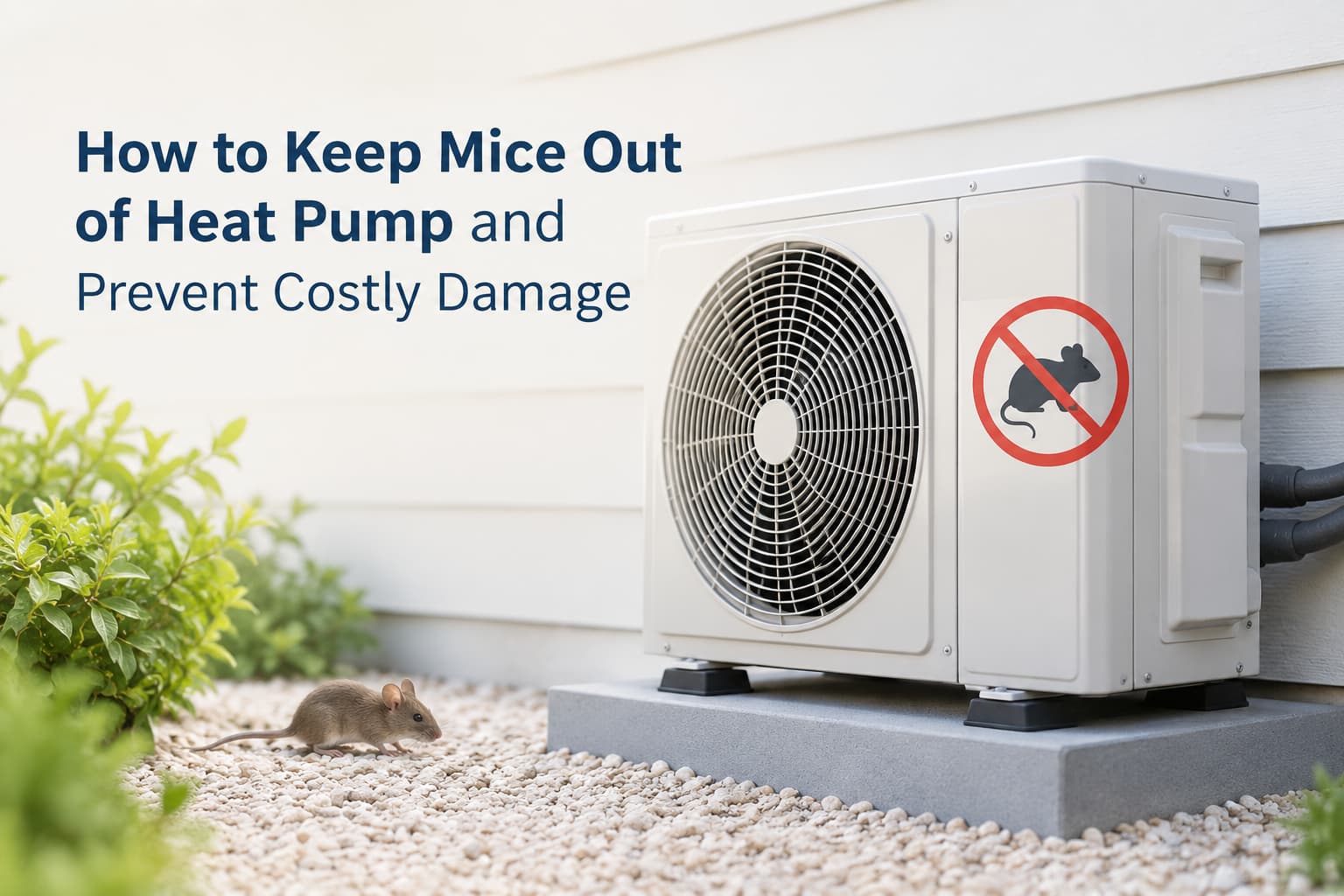
Have you ever opened up your outdoor unit only to see some chewed wires, shredded insulation, and even a suspicious nest hidden between panels? Well, then you know first-hand just how frustrating the presence of mice in your heat pump can get. Rodents are naturally attracted by warmth, safety, and quiet environment offered by your heat pump, particularly once the weather starts getting colder. A neglected rodent infestation can easily escalate from a tune-up to a pricey heat pump repair job.
But what you should know is that preventing mice from nesting in your heat pump doesn’t take too much effort. Some regular maintenance and prevention tips can save your heat pump from unnecessary problems. Read on to find out more.
Why Do Mice Like Heat Pumps?
Heat pumps are the perfect home for mice because of how warm and comfortable they are and how many places there are to hide. Throw in some leaves or tall grass in the surrounding area, and the mouse will feel right at home.
Mice are specifically drawn to:
- The heat emitted from the refrigerant lines and electrical components
- Hard-to-reach spots within the outer housing
- Materials used for nesting such as leaves, grass, and loose insulation
- Any nearby food or water sources, even if they are just a couple of feet away
As soon as the mice start to take up residence, you know that they will not be sitting idly by. They can chew the wires, nest the motor fans, or plug up condensate lines and drains. Each of these can result in short circuits, reduced air flow, or shut down your entire system.
Signs That You May Have a Mouse Problem
Before going into how to prevent mouse problems, it is important to recognize the signs. These include:
- Droppings or pieces of nesting material inside or around the unit
- Damaged wires or frayed insulation
- Scurrying, scratching, or rustling noises from within the cabinet
- A system that doesn’t work properly or turns off without reason
- A damp or mildew smell, or even the smell of burning around the electrical panel
- Weaker heating
It might be time to get a professional in there if you see any of these signs.
Easy Tips for Stopping Mice From Getting into Your Heat Pump
Clear the Area Around the Unit
Rodents love messiness, so the simplest first step would be to tidy up. Leave several feet of unobstructed area around the heat pump. It should not be surrounded by any leaves, mulch, and any other lawn debris. Also, cut off any bushes and branches touching the cabinet of the heat pump. Do not pile firewood and storage boxes nearby. If water is prone to accumulate in the soil close to the heat pump, solve this problem too. Wet soil, like hot one, will attract more pests.
A pleasant additional trick: some plants, such as rosemary, mint, lavender, and garlic are proven to repel mice. So plant them some distance away from the heat pump (not right next to it).
Seal the Openings
This is probably the best measure you can take. Rodents can squeeze into openings smaller than a coin. You should look for openings around:
- Refrigerant line penetrations where pipes go through the wall or the heat pump itself
- Wiring holes and conduit openings
- Bottom panels, base pads, and access covers
- Fan grills and cabinet seams
The fact that the cracks are filled by steel wool is a great way of sealing the space because the mice won’t chew through this material. The other two good options include stainless steel mesh or hardware cloth with openings of 1/4 inch, whereas the best way of achieving a permanent solution will be combining the steel wool with the silicone caulk. However, it is better not to use expanding foam because the mice will chew through it.
Add Physical Barriers
Beyond sealing, a few physical upgrades go a long way:
- Fine wire mesh over vents and openings, while still allowing proper airflow
- Line-set covers with tight-fitting ends
- Elevating the unit slightly, since narrow legs or stands are harder for mice to climb
- A small protective enclosure with fine mesh, as long as it doesn’t block ventilation
A qualified technician can install these without affecting how your heat pump system performs.
Go for Natural Deterrents
In case you want to go chemical-free, here are some natural deterrence methods that you may try:
- Cotton balls dipped in peppermint oil at the entry points
- Cedar shavings or pine shavings at the base
- Dryer sheets or strongly scented bars of soap to be changed once in a while
You can also use ultrasonic deterrents as an additional option. Just remember not to put any poison close to the system. A mouse that dies inside the cabinet can create an even bigger mess and odor problem than the original infestation.
Why Maintenance Is Needed
It is necessary to maintain the heat pump system on a regular basis because it will help us to identify the cause of the problem in the early stages. In addition to maintaining the system, the technician will be able to detect any signs of nesting, clear the debris from the system, inspect the wiring, and check if there is any damage to the seals or access panels. It would be twice a year for most homeowners.
A Quick Prevention Checklist
- Clear leaves, mulch, and vegetation from around the unit
- Seal gaps with steel wool, mesh, or silicone
- Install rodent guards or fine mesh screens
- Use natural repellents near entry points
- Book professional maintenance twice a year
- Keep trash, pet food, and bird feeders away from the unit
When to Hire a Professional
As soon as you detect signs of nesting, damaged wiring, or any other changes which are affecting the performance of the heat pump system, you should turn to professionals for help and not try to fix the issue yourself. Doing the work related to electrical parts can be dangerous without proper knowledge and training, so a Airlinx will be able to do all the work right the first time in Burnaby and nearby areas.
Conclusion
Though mice are relatively small animals, their impact on a heat pump system is quite damaging and can cost a lot of money. But the good news is that all you need to prevent them from entering the system is just some preventive measures.